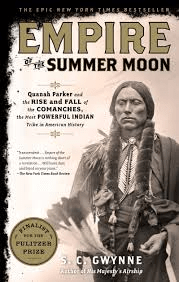
At its core, Empire of the Summer Moon is a story about destroying the destroyers, unhorsing the horsed, and domesticating the most dominant tribe of the southern plains.
The characters and the history make it a fun story. If you’re a coaster like me, you probably never learned about the Comanches.
The author does a good job trying to give you the perspectives of the frontiersmen, the tribes, the Rangers, lawmakers, and more.
The Comanches lived in obscurity until they embraced a new technology in the 1600s more than any other tribe: the horse*. Much like the Mongols 400 years earlier, they built a culture centered around fighting skills on horseback. This led them to storm down from the Eastern Rockies and dominate the buffalo-rich southern plains. They fought so fiercely that Mexico invited Midwestern settlers to Texas, a trick to create a buffer against the Comanches. Instead, they recruited a stubborn bunch who fought to form their own republic (how this went down was news to me).
From there, we meet John Coffee Hays (great middle name, also known as Captain Jack). He turned the Texas Rangers into the formidable force that finally challenged the Comanches. Captain Jack teaches us adaptability, the value of embracing new ways, and above all, that boldness is a strategy of its own. Even when outmanned, he went straight for the enemy leader, learning early that taking out the chief caused the rest to flee.
We also see the discipline and leadership of Ranald Slidell Mackenzie, who eventually befriended Quanah, the last chief of the Comanches. Mackenzie was a prolific fighter, but he was not long for this world. After acting as the hero on many occasions, he descended into madness and died in obscurity. No one knows for certain what caused it, but he suffered severe head injuries—validating today’s research on the importance of protecting your head!
Quanah, the son of a kidnapped Texan, became the last chief of the Comanches and an all-time character in American history. On horseback, he was the baddest dude where the buffalo roamed. However, he recognized when it was time to hang it up. As a leader for his people, he learned English, compromised when necessary, and remained stubborn when it counted, making him highly effective. He even hosted Teddy Roosevelt in his home—along with the 23(!) children he fathered.
Overall, it’s great narrative nonfiction that I’d recommend to a friend and the tens of people who will read this.
(*note to self: don’t be afraid to adopt new tech)


Your reading habits are inspiring, Brother!
Saw the below and immediately thought of your voicemail business idea…
https://www.kqed.org/forum/2010101914312/whats-a-voicemail-youll-never-delete
Send our love to the family!
LikeLike
Thanks, G. & you’re running speed is an inspiration…I can’t get you passing me in the triathlon off my mind!
LikeLike