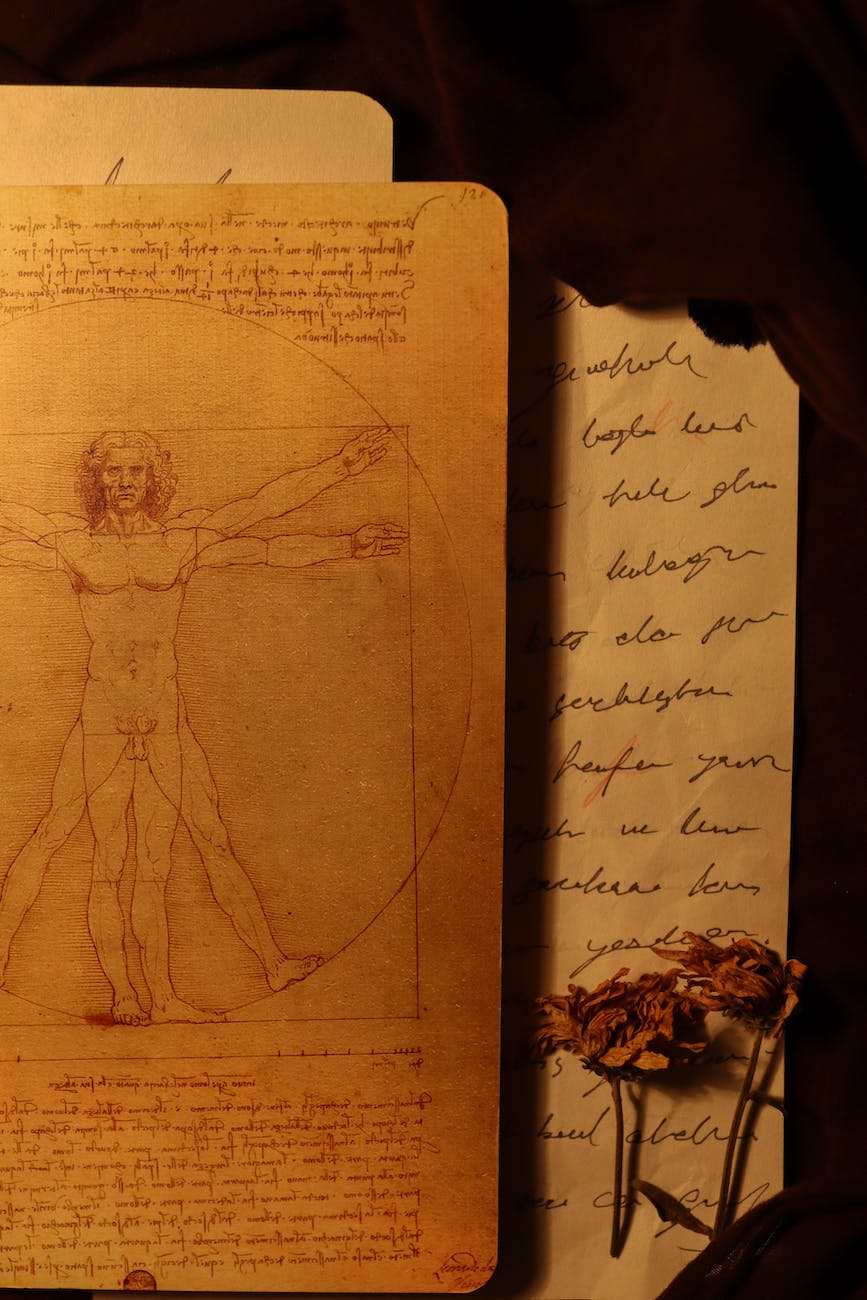
Leonardo Da Vinci came up during an age of exploration, invention, and the explosion of knowledge through the printing press. Not dissimilar from today with space exploration on the horizon, computers, and the internet.
Leonardo was not “a man of letters,” meaning he had no formal education. He was, what he called, “discepolo della sperientia,” a disciple of experience.
In a sense, we all are.
His experience was likely more mundane than what we live in today, yet he was an inventor, painter, playwright, and architect.
What made Leonardo different? How did a man with no education turn experience into insight?
Two things made him different:
- Curiosity
- Acute observation
Both of these can be practiced and developed.
As a kid, Einstein recalls lying in bed wondering what forces make a compass point north. Leonardo had that same childlike curiosity throughout his life.
In his journals, you’ll find obscure entries like “describe the tongue of a woodpecker,” or “which nerve causes the eye to move so that the motion of one eye moves the other?”
His presence allowed him to observe things closely.
You will find entries in his journal that describe how a dragonfly flaps its four wings differently. Who does that?
Another describes the flight of a bird stating “as much force is exerted by the object against the air as by the air against the object.” Two hundred years later Newton states a revised version as his third law of motion.
Anatomy, friction, motion, light. Through acute observation, he studied it all.
You might be thinking, “That’s great for Leo, what’s in it for me?”
Well, Leo leaves a trick for us in his notebook on how to develop observation:
Look carefully and separately at each detail. He compared it to looking at the page of a book, which is meaningless when taken in as a whole and instead needs to be looked at word by word. Deep observation must be done in steps: “If you wish to have sound knowledge of the forms of objects, begin with the details of them, and do not go on to the second step until you have the first well fixed in memory.”
– Leonardo Da Vinci by Walter Isaacson
How much more value would we add to our work and lives if we channeled this level of curiosity & observation?
Subscribe 👇🏻📧
Drop your email in the box above to receive an update when I post my weekly blog. Follow on Twitter for other shenanigans.

 kevinconnelly.blog
[…] 1/ Da Vinci, like all of Isaacson’s subjects, was a fascinating character. Two traits I want to embody from Leonardo are his curiosity and his intense observation. He was acutely observant of the world around him, which enhanced his painting skills dramatically. The more observant you & I are, the more, seemingly unconnected, insights we can add to our work. Link to previous post. […]
LikeLike